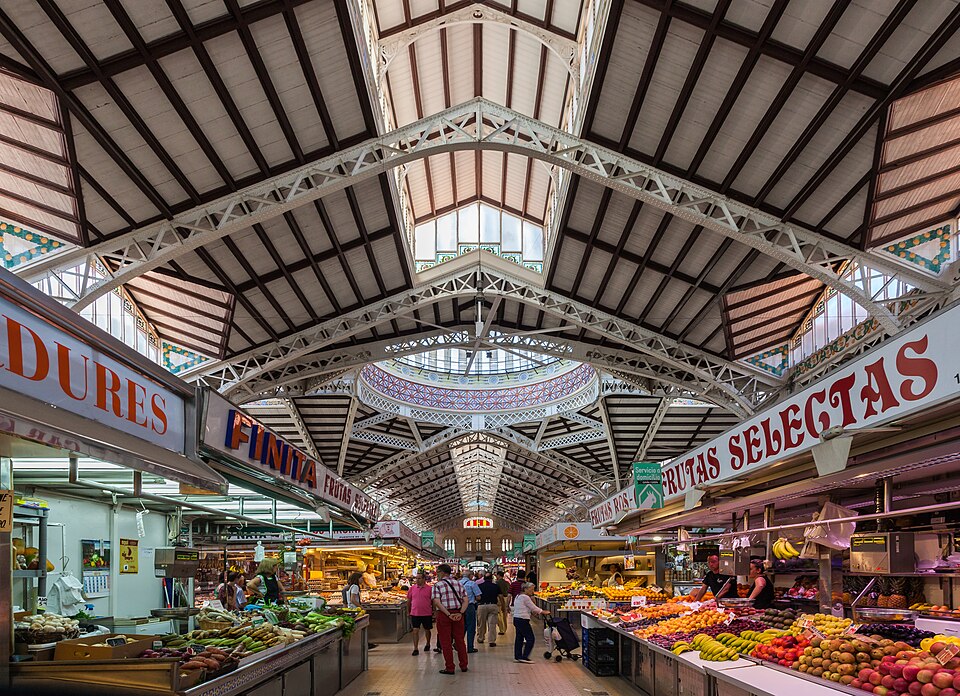
Overview
The building is Valencian modernisme — the local answer to Catalan modernisme — with a fish hall under its own dome, mosaic panels of the produce sold beneath them, and a weathervane of a parrot on the roof. It is a working market first: prices are for residents, the fish comes in from the port that morning, and the horchata and snail stalls are for people doing their shopping, not for a food tour.
Highlights
Go before one in the afternoon; stalls start closing after that and the market shuts by three. Eat at the bar counters inside rather than the restaurants around the square. The Llotja de la Seda across the street, the fifteenth-century silk exchange, is a UNESCO site and takes twenty minutes.