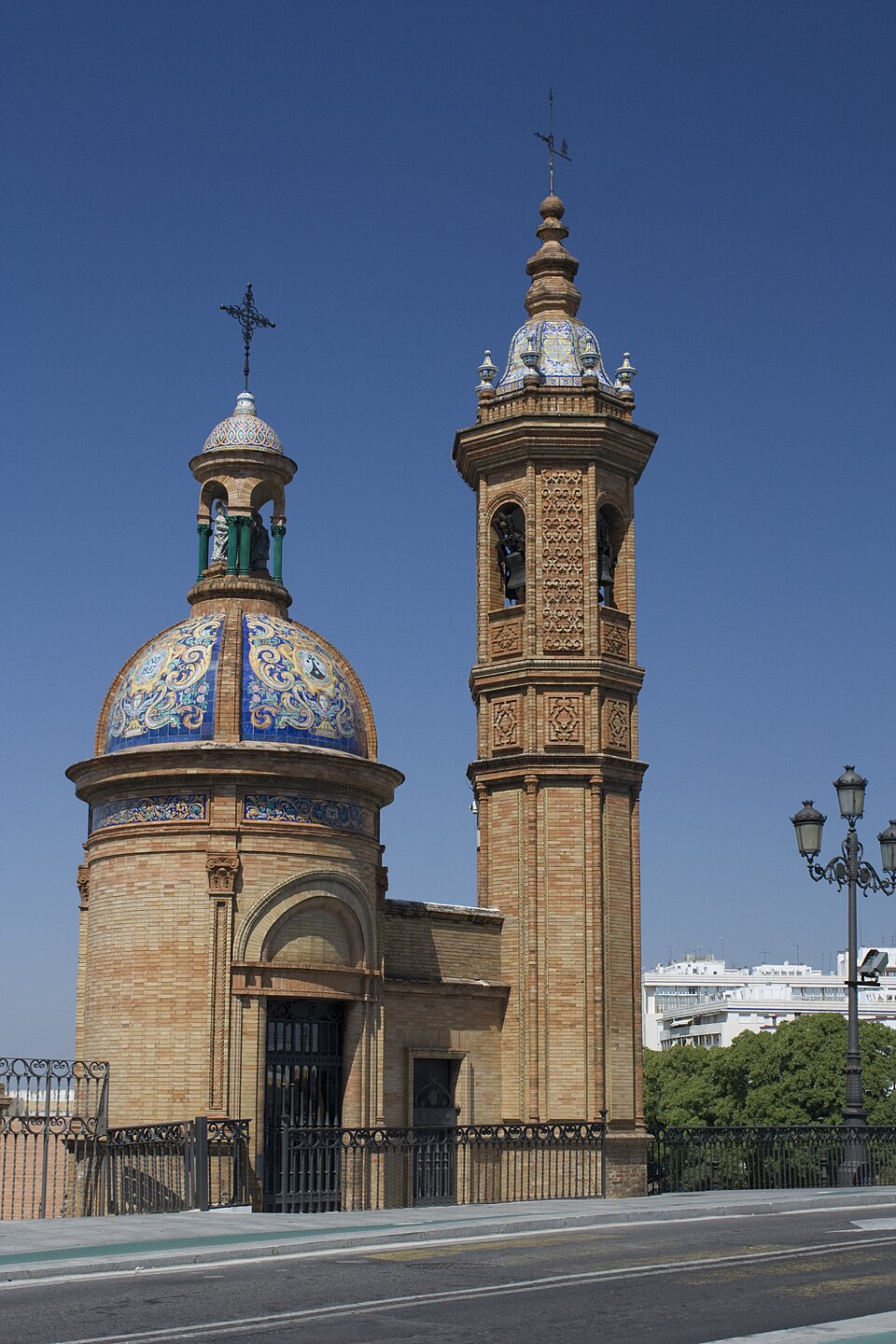
Overview
The quarter was separated from Seville by the river and by attitude — Trianeros considered themselves a place apart, and the flamenco that came out of the nineteenth-century Roma families here is one of the roots of the form. The ceramics industry sat on Triana’s clay banks, and the Centro Cerámica Triana is built over excavated kilns. The Castillo de San Jorge, under the market at the bridgehead, was the seat of the Inquisition in Seville and is now a free museum about it.
Highlights
Cross the Isabel II bridge in the evening and eat in the market or the streets behind it. The ceramics centre is small, cheap and the best explanation of what Triana made. Calle Betis along the river has the view back at the Torre del Oro and the cathedral, which is the classic Seville photograph.