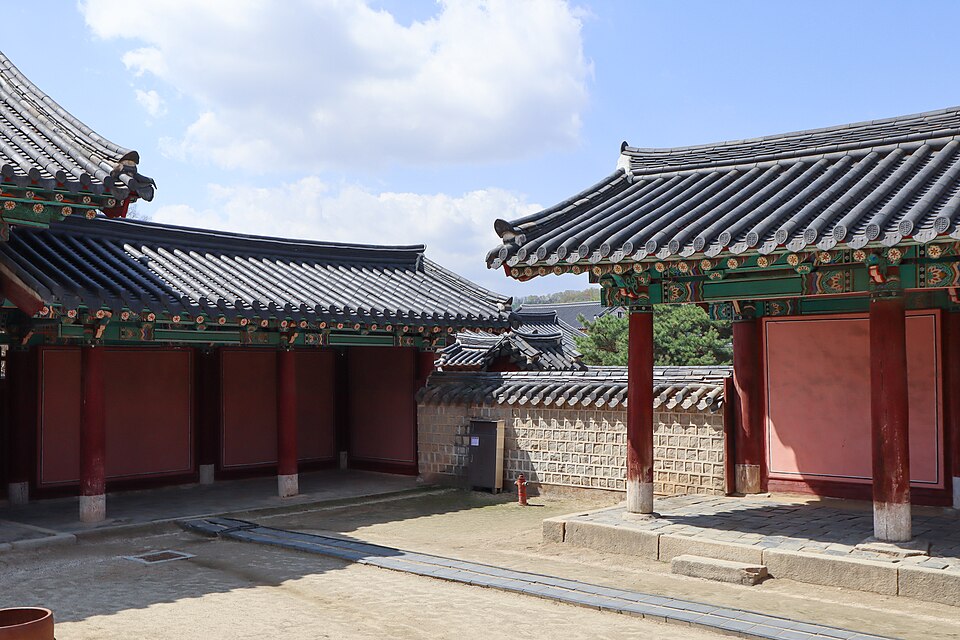
Overview
The Joseon state kept royal portraits in several shrines so that at least one would survive war, and Jeonju’s was the ancestral seat, which is why the shrine is here. The buildings were burned in 1597 and rebuilt in 1614. Behind the main hall, a museum displays the palanquins and ritual equipment used to move a portrait, which required a procession of hundreds and the closing of roads.
Highlights
Look at the portrait properly: the dragon robe, the throne, and the convention that a king’s likeness had to be exact to the hair — a copy that erred by one was to be destroyed. The bamboo grove behind is the quietest corner of the hanok village. Entry is free with hanbok, and the grounds are ten minutes from the main food street.